

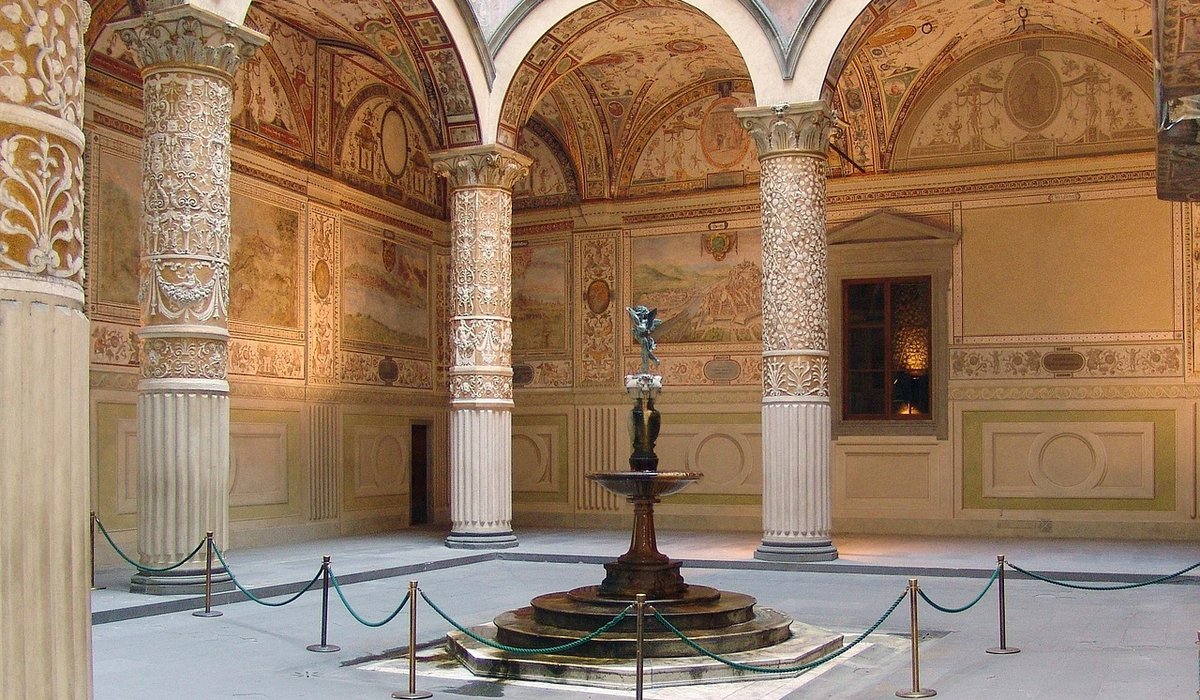
A courtyard is a wonderful thing: sheltered, private and easy to look after. The trade-off is usually light and a sense of space. Walls on every side can make even a generous patio feel like a box, especially in a terraced house or a converted Victorian property where the outdoor space is measured in metres rather than acres.
Mirrors are the oldest trick in the garden designer's book for exactly this problem, and they remain the most effective. Done well, a single panel can double the apparent depth of a courtyard, pull light into a shady corner and turn a plain boundary wall into something that feels like a view. Done badly, it looks like a mirror screwed to a fence. The difference is all in the choosing, the placing and the fixing.
Why Mirrors Work So Well in a Courtyard
Mirrors don't create space; they borrow it. A panel placed opposite a leafy border or a favourite planter reflects greenery back into the space, so your eye reads the garden as continuing rather than stopping at brickwork. The effect is strongest when the reflection is of something interesting: foliage, a climber, a sculpture, a water bowl. Reflecting a blank wall just gives you two blank walls.
They also work hard on light. Courtyards often have one bright side and one gloomy side, and a mirror on the dark wall bounces brightness into corners that would otherwise stay dull all summer. In small spaces, that extra light is often more valuable than the illusion of size.
Choosing a Mirror That Will Survive Outdoors
This is where most projects fail. An indoor mirror moved outside will cloud, de-silver and flake within a season or two.
- Look for glass with a sealed edge and a moisture-resistant backing. Stainless steel or aluminium backing is what you want; mild steel will rust and stain the glass from behind.
- Insist on safety backing. A sheet of safety film means that if the glass is knocked, it holds together rather than shattering across the patio.
- Consider acrylic if weight is an issue. It's much lighter and cheaper, but it scratches easily and can distort reflections slightly. For a low panel or an awkward wall, that trade-off is often worth it.
- Avoid anything with a cardboard or hardboard back. It will swell and fail.
- Go bigger than you think. One generous panel reads as a window. A cluster of small mirrors reads as a craft project.
Where to Position It for the Best Effect
Positioning matters more than size. A few reliable placements:
- Opposite the view you want more of. Stand where you sit most often, look at what you enjoy, and put the mirror on the wall facing it.
- On the shadiest wall. This bounces light back into the courtyard rather than out of it.
- Behind a focal point. A planter, a small tree in a pot or a water feature placed in front of a mirror instantly looks twice as substantial.
- Low down. A panel near ground level reflects sky and planting, which reads as depth.
- Framed as a feature. A mirror framed with trellis or timber to look like a gate or a window sits far more comfortably in a garden than a bare sheet of glass.
Tilt the mirror very slightly downward so it catches planting rather than sky or, worse, a neighbour's upstairs window. Which brings us to an important point: check what you're reflecting from your neighbour's side as well as your own. Nobody wants a mirror aimed at their bathroom, and a polite word avoids an awkward dispute later.
Also keep mirrors out of direct, concentrated sunlight. A curved or poorly angled reflective surface can focus rays and scorch plants, fencing or furniture. Flat mirrors in a shaded or partially shaded position are the safe choice.
Pairing Mirrors With Planting and Lighting
The magic happens when the mirror stops being a mirror and starts being part of the garden. Plant in front of it, not just beside it, so stems and leaves break up the reflection and add layers. Allow a climber to run along a trellis at the edge of the frame, but keep foliage off the glass itself.
Lighting is the evening equivalent. A small uplighter or a warm-white spike light placed in front of the mirror doubles its glow and gives the courtyard depth after dark. Keep it low and warm rather than bright and white, and you'll get an inviting, almost room-like feel. Placing a bench against a mirrored wall is another simple win: it looks like double the seating and gives you somewhere to sit and enjoy the reflection.
Fixing and Maintaining Outdoor Mirrors
- Fix to a solid wall, not a fence panel that flexes in the wind. Brick, block or rendered walls are ideal.
- Use stainless steel screws and masonry plugs, or a French cleat or timber batten system for heavier panels.
- Lift the bottom edge off the ground by a few centimetres and leave a small gap behind for drainage and airflow.
- Clean with warm soapy water and a soft cloth. Never use abrasives or ammonia-based cleaners on the backing.
- Check fixings and seals each spring, and re-seal edges with clear silicone if you spot any lifting.
Common Mistakes to Avoid
The most frequent error is reflecting something dull: a bare wall, a wheelie bin, a boiler flue. Move the mirror rather than accept a poor view. The second is overdoing it. Two or three well-placed panels look intentional; six look like a hall of mirrors. Third, don't hang them at head height where they only reflect fence and sky. And finally, don't buy cheap. A well-made, properly sealed mirror will last a decade outdoors; a bargain one will be binned by autumn.
Get those things right and a small courtyard stops feeling small. It feels bright, layered and quietly generous, which is exactly what a well-designed outdoor room should be.


Coding is used in almost all aspects of life and work now, be it directly or indirectly. It’s not just for companies in the tech sector. “An increasing number of businesses rely on computer code,
Coding is used in almost all aspects of life and work now, be it directly or indirectly. It’s not just for companies in the tech sector. “An increasing number of businesses rely on computer code,
Coding is used in almost all aspects of life and work now, be it directly or indirectly. It’s not just for companies in the tech sector. “An increasing number of businesses rely on computer code,